
Protection of Soft Targets in the Czech Republic Still Lacks a Functional System. Waiting for the State May Not Be Enough
Security Analysis
Soft Target Protection Still Lacks a Functional System. What Did the SAO Report Reveal?
SIHASO · Soft Target Protection
The Supreme Audit Office published a report concluding that, even after eight years, the Ministry of the Interior had not established a fully functional national system for the protection of soft targets. The audit, covering the period from 2021 to 2025, found that many planned measures remained at the strategic level and were never fully implemented in the day-to-day operations of public institutions.
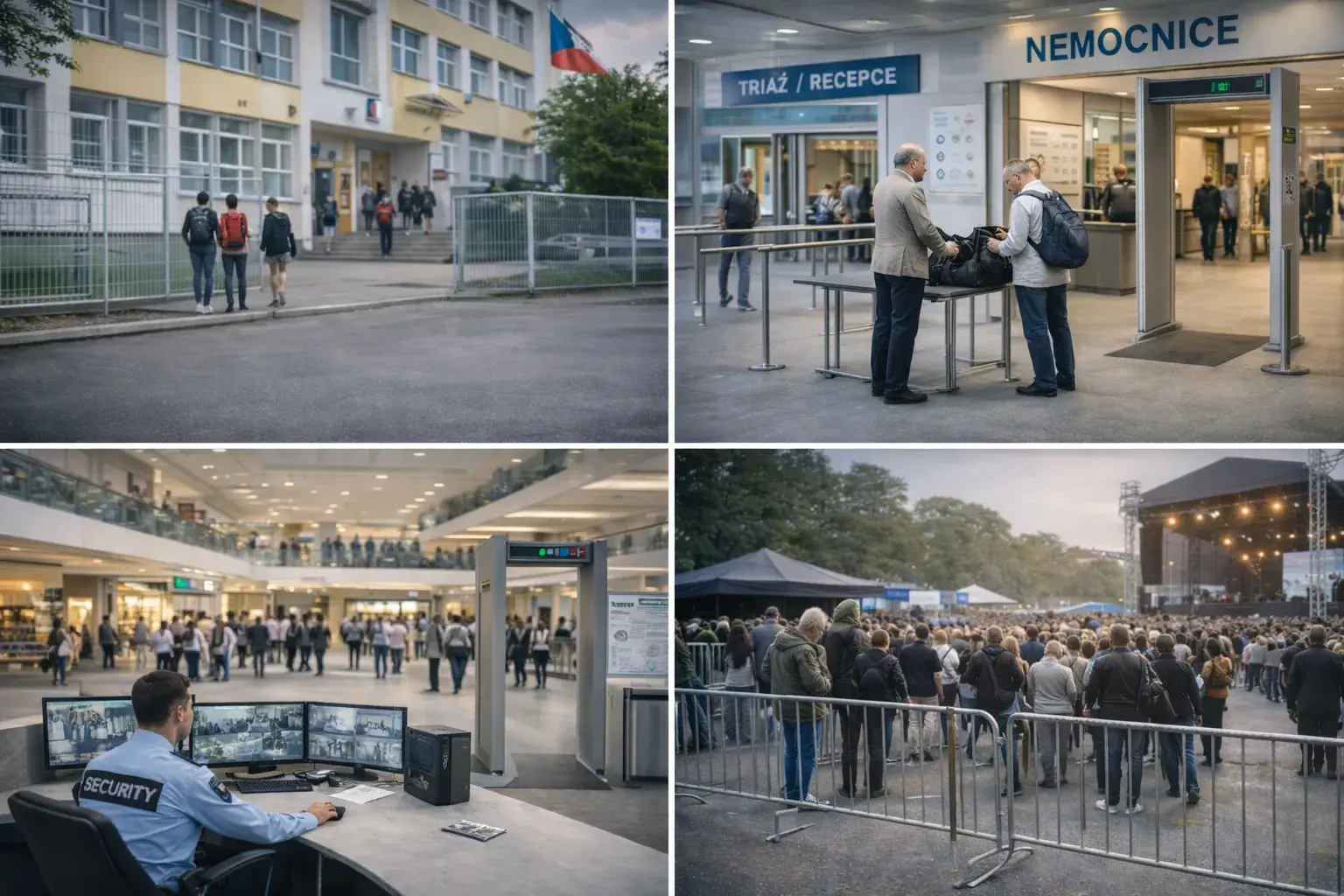
From a security perspective, this is not merely an assessment of public administration. Above all, the report highlights that responsibility for protecting schools, hospitals, government offices, and cultural institutions cannot be left solely to a centralized national system.
What the Report Reveals
The Supreme Audit Office identified several long-standing weaknesses. These included the absence of clearly defined responsibility for managing the system, the lack of a unified methodology for identifying the highest-risk locations, and insufficiently stable funding. Training and education activities were interrupted during certain periods, while the early-warning system was not designed to support the rapid exchange of information between government authorities and individual institutions.
The result is an environment in which organizations often operate independently, without consistent standards or a clear understanding of which protective measures should represent the minimum acceptable level of security.
What This Means for Organizations
The most important conclusion is not simply criticism of the national system. More significantly, every publicly accessible organization should actively manage its own security, regardless of how the centralized framework is structured.
Where Should Organizations Begin?
Assess the actual risks. Security measures must reflect the specific facility, its daily operations, the movement of people, and its identified vulnerabilities.
Establish clear procedures. Employees must know how to respond during the first critical minutes of an emergency.
Test preparedness regularly. A security plan is effective only when it is repeatedly tested through practical exercises and realistic scenarios.
Integrate technology, processes, and people. Effective protection is not created by isolated measures, but by ensuring that all components work together as one coordinated system.
Conclusion
The Supreme Audit Office report is not merely an evaluation of government institutions. It is a reminder that security cannot be built only after a serious incident has already occurred. Organizations that consistently invest in risk assessment, staff preparedness, and the regular testing of emergency procedures are significantly more resilient when responding to critical events.
Read the Supreme Audit Office Press Release →
Does Your Organization Need a Preparedness Assessment?
SIHASO helps schools, hospitals, government institutions, and private companies build effective and integrated security systems. We conduct risk assessments and security audits, design protective measures, and deliver practical emergency exercises that test an organization's readiness under realistic conditions.
```