
A Computer Containing 1,800 Intimate Patient Photos Disappeared. A Failure That Could Have Been Prevented.
Security Insight
A Lost Computer Containing Patient Data. Why Security Is a Process, Not Just Technology.
SIHASO · Cybersecurity
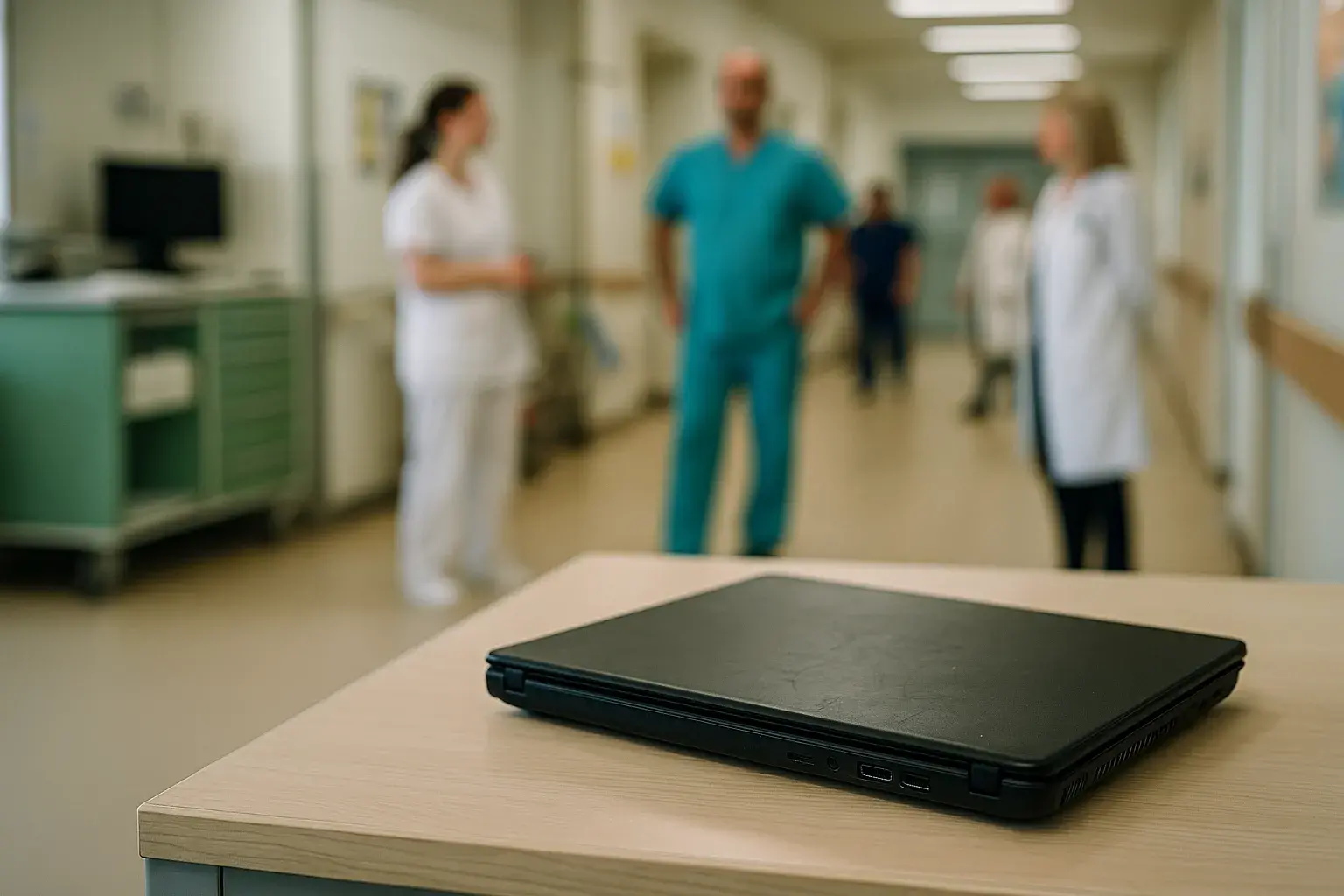
University Hospital Královské Vinohrady disclosed the loss of a computer containing more than 1,800 medical photographs of patients. The device stored highly sensitive clinical documentation that should never have left the hospital's secure environment. Although there is no evidence that the data was misused, the loss itself represents a serious security incident with potentially significant consequences for patient privacy and the hospital's reputation.
The incident also serves as another reminder that the Czech healthcare sector has faced similar challenges before. The ransomware attack against University Hospital Brno in 2020 demonstrated how vulnerable healthcare organizations can be to security incidents. The latest case raises an important question: were the lessons learned truly incorporated into everyday practice?
Security incidents do not begin when a device goes missing. They begin much earlier—when an organization loses visibility over its assets, data, and security processes.
What This Incident Reveals
Losing a device containing sensitive information is rarely just a technical failure. In most cases, it exposes multiple systemic weaknesses, including inadequate asset management, missing data encryption, the absence of clearly defined incident response procedures, or insufficient employee security awareness.
Within the healthcare sector, these risks are even greater. Hospitals process some of the most sensitive personal data imaginable, and any security failure can result not only in regulatory and legal consequences but also in a significant loss of patient trust.
The incident also demonstrates that technology alone cannot guarantee security. True resilience is achieved through the integration of technology, well-designed processes, and well-trained people.
How Similar Incidents Can Be Prevented
Continuous asset monitoring. Organizations should always know where critical devices are located, who is using them, and whether unusual activity has occurred.
Strong technical safeguards. Full-disk encryption, multi-factor authentication, and centralized endpoint management should be standard practice—not optional security enhancements.
Prepared incident response procedures. Every organization should have clearly defined processes for handling lost devices or potential data breaches, including communication with regulators, affected individuals, and the public.
Regular employee security training. Security is not solely the responsibility of the IT department. Every employee must understand how to handle sensitive information securely and how to respond when an incident occurs.
How Could AI-Powered Monitoring Help?
Incidents like this demonstrate that protecting data alone is not enough. Organizations must also maintain continuous visibility over the devices that store it. AI-powered Security Operations Centers (SOC) provide around-the-clock monitoring of critical assets, detect abnormal behavior, and significantly reduce incident response times.
Had the missing computer been integrated into a centrally managed monitoring system, its disconnection, movement outside an authorized area, or other suspicious activity could have been detected immediately. Automated alerts would have enabled the security team to respond without unnecessary delay and substantially reduce the risk of sensitive data exposure.
Key Takeaway
The incident at University Hospital Královské Vinohrady is not simply an isolated failure—it is another reminder that security cannot be achieved through technology alone. Truly resilient organizations combine robust technical controls, effective governance, well-defined processes, and trained personnel. The cost of prevention is almost always significantly lower than the financial, legal, and reputational consequences of a serious security incident.
How Can SIHASO Help?
SIHASO helps organizations build security as an integrated system. We conduct comprehensive security audits, perform risk assessments, design protective measures, and develop processes for safeguarding sensitive data, physical assets, and critical infrastructure. Our goal is to identify vulnerabilities and reduce risk before they develop into security incidents.